What Are Sciatica and Slip Disc?
Sciatica describes pain or other nerve-related symptoms that travel from the lower back or buttock into the leg, usually along the path of the sciatic nerve. A slip disc, disc bulge or disc prolapse is one of the common conditions that can irritate a spinal nerve and produce sciatica, but not every person with sciatica has a disc prolapse.
Patients may feel pain in the lower back, buttock, back of the thigh, calf or foot. Some people have mainly leg pain rather than severe back pain. Tingling, numbness or weakness may also occur when a nerve is significantly irritated.
Not every back-and-leg pain is a slipped disc, and not every MRI finding requires surgery. The pattern of symptoms and the clinical examination are important before deciding on treatment.
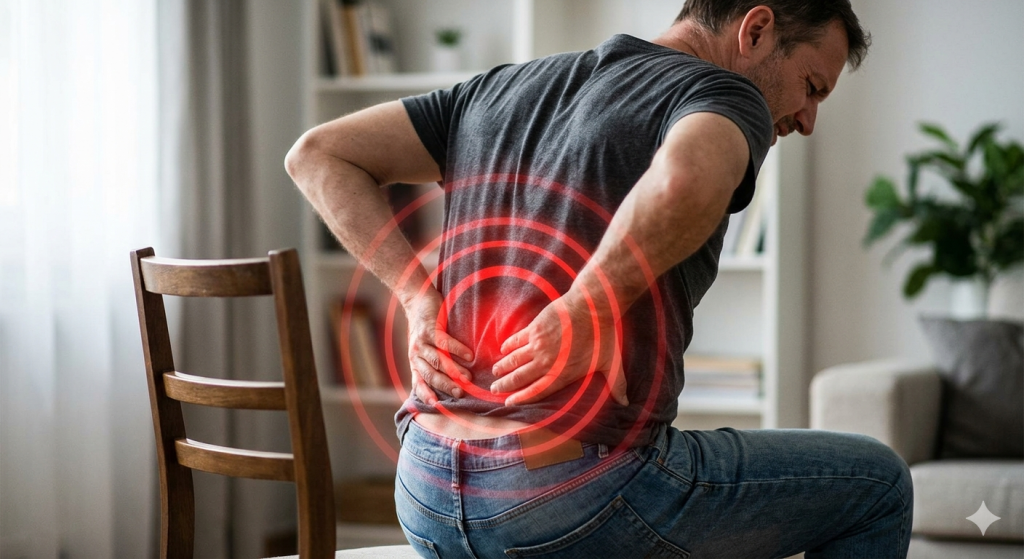
How Patients Commonly Describe Sciatica
Patients often use everyday words rather than the medical term “sciatica”. These descriptions are useful during consultation.
- "Kamar se pair tak dard ja raha hai."
- "Back se leg mein pain shoot karta hai."
- "Kamar ka dard nikal kar hip aur pair mein jaata hai."
- "Pair mein jhanjhanahat hoti hai."
- "Pair ya ungliyon mein sunnpan hai."
- "Jalne ya electric shock jaisa pain hota hai."
- "Baithne se leg pain badh jata hai."
- "Khade hone ya chalne par pain badhta hai."
- "Cough ya sneeze karne par pain pair mein shoot karta hai."
- "Pair mein weakness lagti hai."
Also tell your doctor whether the symptoms are on one side or both sides and whether there is difficulty walking, climbing stairs or lifting the foot.
Common Causes of Sciatica and Leg Pain
Sciatica-like symptoms can have several causes. Common possibilities include:
- Disc prolapse or herniated disc causing irritation of a nerve root.
- Age-related spinal changes that narrow the space around a nerve.
- Spinal stenosis, particularly in older adults.
- Muscle spasm or mechanical back pain that may refer pain to the buttock.
- Injury after lifting, twisting, a fall or accident.
- Other less common causes involving joints, nerves, inflammation or serious disease.
Your existing back pain guide explains common mechanical causes of low back pain, while the disc prolapse rehabilitation page provides more specific information about rehabilitation when a disc problem has been diagnosed.
Symptoms of Sciatica and Slip Disc
Symptoms vary depending on which nerve is irritated and how severely it is affected.
- Low back pain with buttock pain
- Pain travelling into the thigh, calf or foot
- Burning, shooting or electric-type pain
- Tingling or pins and needles
- Numbness in part of the leg or foot
- Muscle weakness
- Difficulty walking because of pain or weakness
- Symptoms that worsen with prolonged sitting, bending, coughing or sneezing in some patients
The exact pattern matters. Pain only in the buttock is not automatically sciatica, and pain in the leg can sometimes come from causes outside the spine.
Sciatica While Sitting, Bending or Lifting
Many patients notice symptoms after prolonged sitting, driving, bending forward or lifting a heavy object. These activities can increase symptoms in some people with disc or nerve irritation.
There is no single posture that explains every case. A patient may have more pain while sitting, while another may feel worse while standing or walking.
During consultation, mention whether pain is triggered by:
- Long periods of sitting
- Driving or motorcycle travel
- Bending forward
- Lifting weights
- Turning in bed
- Walking or standing
Sciatica at Night
Some people with sciatica have difficulty sleeping because certain positions increase pain. Changing position, using comfortable support and avoiding prolonged aggravating postures may help.
Persistent night pain should not automatically be attributed to a slipped disc. Severe, progressive or unexplained pain, especially with fever or other concerning symptoms, needs medical assessment.
What Can I Do for Sciatica at Home?
For uncomplicated nerve-related back and leg pain, complete bed rest is usually not the goal. A short period of relative rest may be reasonable during a severe flare-up, followed by gradual return to comfortable movement.
- Keep gently active within a comfortable range rather than staying in bed all day.
- Temporarily reduce lifting, repeated bending or movements that clearly worsen symptoms.
- Take regular movement breaks during sitting and driving.
- Use a comfortable sleeping position.
- Return to walking and normal activity gradually as symptoms allow.
- Avoid forceful spinal manipulation or repeated self-cracking when the diagnosis is uncertain.
If numbness or weakness is progressively worsening, do not rely only on home care.
Physiotherapy and Exercises for Sciatica
Physiotherapy can be an important part of non-surgical treatment for many patients. The programme should be based on the cause of symptoms, the examination and the stage of recovery.
A rehabilitation programme may include:
- Gentle movement and mobility exercises
- Trunk and core strengthening when appropriate
- Hip and lower-limb strengthening
- Gradual walking and activity progression
- Movement and lifting education
- Exercises chosen to improve function without provoking significant nerve symptoms
There is no universally correct “slip disc exercise”. An exercise that helps one patient may aggravate another, especially when there is significant nerve irritation.
For detailed rehabilitation after a diagnosed disc problem, see disc prolapse rehabilitation. For muscular back spasm, see paraspinal muscle spasm rehabilitation.
Do I Need an MRI for Sciatica?
Not every patient with back pain or sciatica needs an MRI immediately.
MRI can show discs, nerve roots, the spinal canal and other soft tissues. It may be considered when:
- Leg pain is severe or persistent
- There is significant or progressive weakness
- Symptoms are not improving as expected
- There was significant trauma
- Surgery or another procedure is being considered
- Warning signs suggest that a more serious condition needs to be excluded
An MRI finding by itself does not prove that the disc seen on the scan is the cause of pain. The scan should be interpreted alongside the history and examination.
Heat, Ice and Pain Medicines
Heat: Some people find warmth helpful for muscular stiffness or back discomfort.
Ice: A cold pack wrapped in a towel may help after a recent minor injury or acute soreness. Do not place ice directly on the skin.
Pain medicines: Choice depends on age, medical history and other medicines. Anti-inflammatory medicines are not suitable for everyone.
Avoid repeatedly self-medicating for weeks without understanding why symptoms continue.
Does a Slip Disc Need Surgery?
No. Many patients with disc-related sciatica improve without surgery.
Depending on the diagnosis, non-surgical treatment may include:
- Activity modification
- Physiotherapy and appropriate exercises
- Medicines when suitable
- Gradual return to normal activity
- Other treatments selected according to the individual patient
Surgery may be considered for selected patients when disabling symptoms persist despite appropriate conservative management, or when there is significant neurological compromise or an urgent spinal condition.
The decision should not be based on the MRI report alone. Symptoms, examination findings, duration and functional limitation all matter.
For detailed disc rehabilitation, see disc prolapse rehabilitation. For general low back pain, see back pain guidance.
When Should I See an Orthopaedic Doctor?
Arrange an assessment when back or leg symptoms are persistent, recurrent or interfering with normal activities.
- Leg pain continues or keeps returning
- Pain affects walking, work or sleep
- Persistent numbness or tingling
- Weakness in the leg or foot
- Symptoms started after significant injury
- Pain is progressively worsening
- Reasonable self-care has not helped
When Is Sciatica or Slip Disc an Emergency?
Seek urgent medical assessment if:
- There is new loss of bladder or bowel control.
- There is numbness around the groin, inner thighs or saddle area.
- There is rapidly worsening or major weakness in one or both legs.
- There is severe spinal pain after major trauma.
- Back pain is accompanied by fever, chills or feeling very unwell.
- There are other new neurological symptoms such as major difficulty walking or rapidly worsening balance.
These symptoms can indicate significant nerve or spinal involvement and should not be managed only with home exercises.
Common Questions About Sciatica and Slip Disc
Is sciatica the same as a slip disc?
No. Sciatica describes pain or other nerve-related symptoms along the path of a nerve, usually into the buttock and leg. A slip disc or disc prolapse is one possible cause of sciatica, but sciatica can have other causes.
Why does my back pain go down my leg?
Pain travelling from the lower back or buttock into the leg can occur when a spinal nerve is irritated or compressed. The pattern, severity and associated numbness or weakness help determine the likely cause.
Do I need an MRI for sciatica?
Not every person with sciatica needs an MRI immediately. Imaging is considered when symptoms are severe, persistent, associated with significant neurological findings, follow a significant injury, or when the result is likely to change treatment.
Can sciatica get better without surgery?
Yes. Many people improve with non-surgical treatment such as appropriate activity modification, physiotherapy, exercise, medicines when suitable and time. The best approach depends on the underlying cause and severity.
Is bed rest good for slip disc?
Prolonged bed rest is usually not helpful for uncomplicated low back and nerve pain. Short periods of relative rest may be useful during severe flare-ups, followed by gradual return to comfortable activity as advised.
Can I exercise when I have sciatica?
Gentle activity is often useful, but exercises should match the cause and stage of symptoms. Marked weakness, worsening numbness or severe pain requires assessment rather than pushing through exercise.
When does a slip disc need surgery?
Surgery may be considered in selected patients with persistent disabling symptoms despite appropriate non-surgical treatment, significant neurological deficit, or certain urgent conditions. The decision depends on the clinical diagnosis rather than an MRI finding alone.
When is sciatica an emergency?
Urgent assessment is required for new bladder or bowel problems, numbness around the groin or saddle area, rapidly worsening major leg weakness, severe symptoms after major trauma, fever with severe spinal pain, or other serious warning signs.
Continue Reading
These already-published pages provide more detailed information where appropriate.
- Back pain guide — for general low back pain and mechanical back symptoms.
- Disc prolapse rehabilitation — for rehabilitation after a diagnosed disc problem.
- Paraspinal muscle spasm rehabilitation — for muscle spasm and rehabilitation guidance.
- Upper-back & interscapular pain — when pain is mainly between the shoulder blades or upper back.
- Neck pain guide — when symptoms are mainly cervical or extend into the arm/hand.
- Geriatric & senior orthopaedic care — for older adults with broader mobility concerns.
- Fracture guide — for symptoms after significant injury where fracture is a concern.